Case note · E-commerce and content
JINKA Machinery — one store, two kinds of customer
A manufacturer of food and material processing equipment selling into North America, Europe and Asia. The whole site is built around one awkward fact: a $10 grinding plate should be buyable in three clicks, and a $1,400 machine should not be buyable at all.
What the site had to satisfy at once
Read off the live site — a retail buyer and a procurement officer are both first-class visitors here.
The design problem
A spare part and a machine are not the same purchase
Browsing decides the path, not a mode switch
Whether a product can be bought outright or only quoted follows from its own data — a visitor never has to choose a “B2C or B2B” mode and hope they picked right.One side wants a price and a button
Someone replacing a worn grinding plate knows exactly what they need. They want stock, price, and checkout — no conversation, no waiting for a quote.
The other side cannot be sold that way
A machine has to be configured for voltage, material and throughput. Quoting it means knowing where it is going and what it will process, and cross-border freight and customs make a consumer-style return impossible.
So the policy has to branch, not compromise
Rather than pick one model and force both customers through it, the site routes each order type — bought online, bought by quotation, spare part, complete machine — down its own returns and warranty path.
What was built
Storefront, service content and the operational plumbing behind them — delivered and then maintained.
Series catalogue with real prices
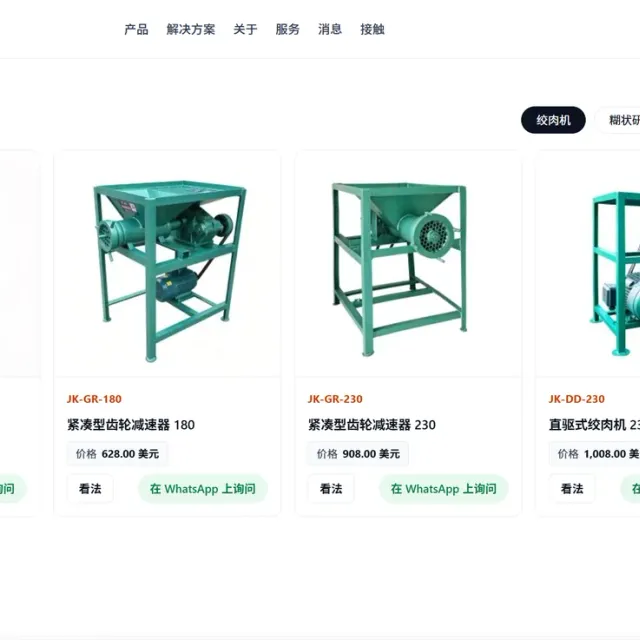
Browsing by machine series, each model with its own specification and price, and a quote route on every card for buyers who need configuration before a number.
Returns and warranty that branch
Four documented routes — ordered on the site, ordered by quotation, spare and wear parts, complete machines — each stating what is self-service and what is not.
Order tracking with two keys
Order number plus the email used at checkout, both required. A guessed order number alone reveals nothing, which matters when order numbers are sequential.
Enquiry that asks the right question
The contact form asks for material, target output, voltage and destination port, so the first reply can be a recommendation instead of a round of questions.
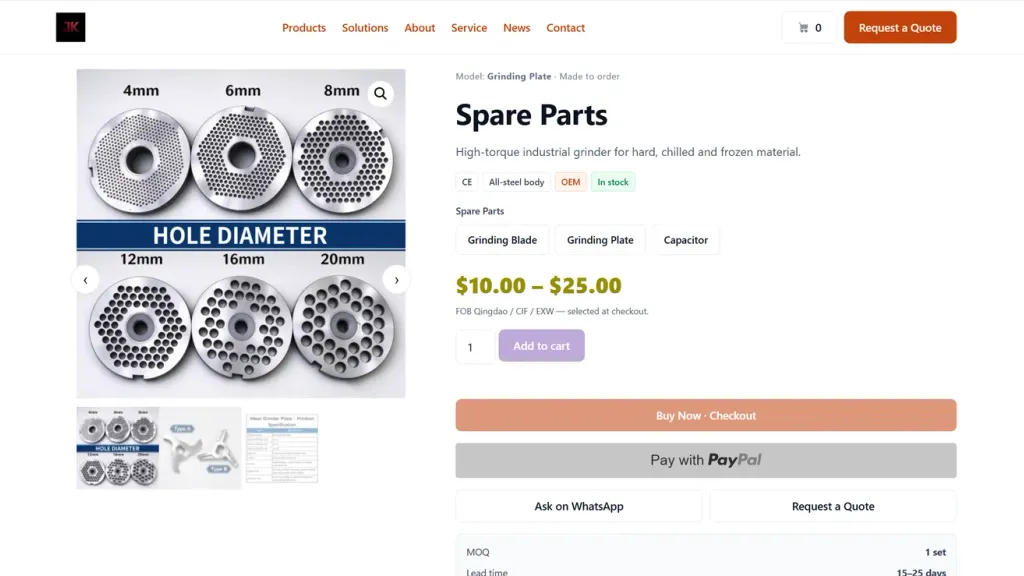
Spare parts with variants and stock
Type A and Type B blades and plates, hole diameters from 4 mm to 20 mm, live stock counts and sale pricing shown against the previous price.
Checkout that fits cross-border trade
Guest checkout, PayPal, shipping selected by destination country, delivery terms (FOB Qingdao / CIF / EXW) stated on the product, and freight options configured per zone.
Inside the site
Screens from the live storefront. The site is English (with Vietnamese for one market) because its buyers are abroad; the client’s own team publishes in Chinese through an admin menu we added for them.
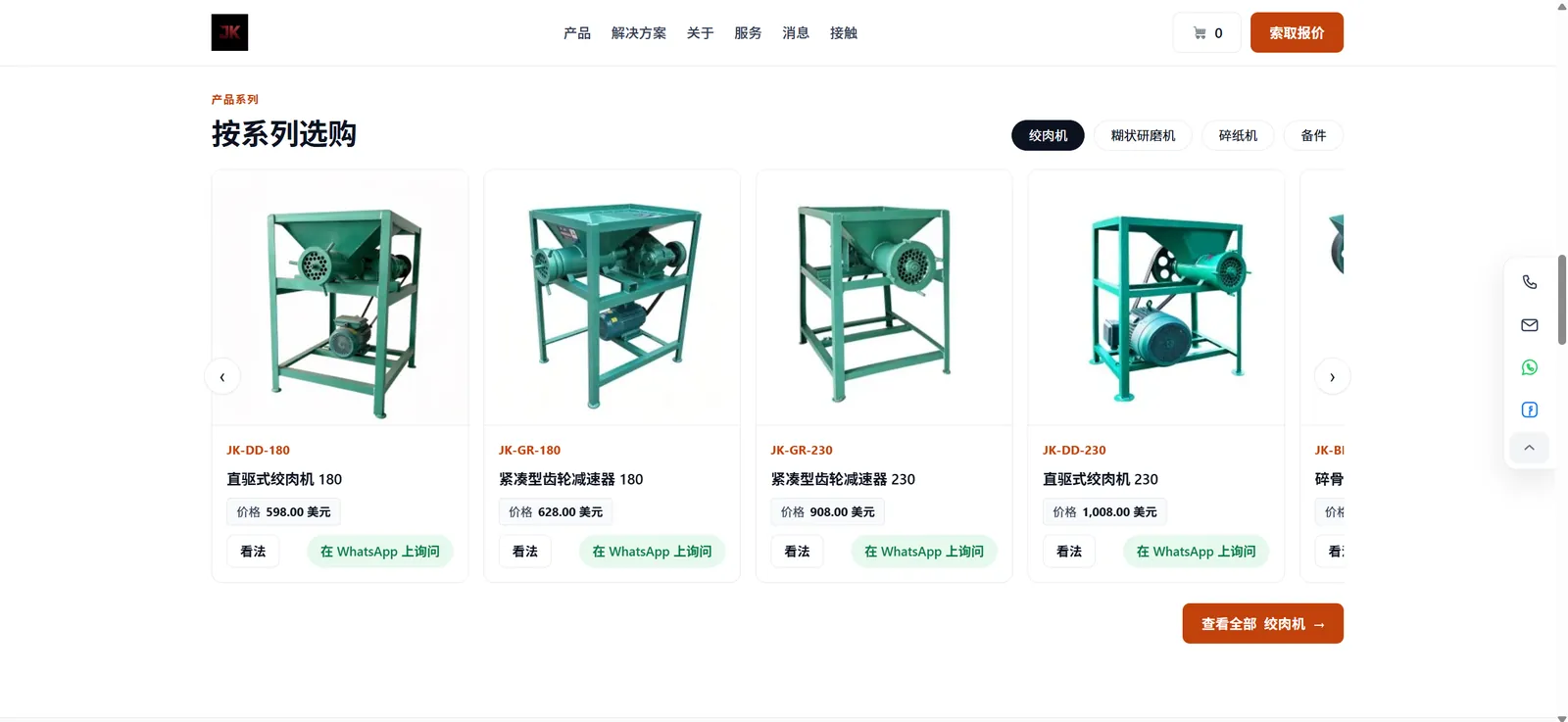
Catalogue by series — each model carries its own price, and every card offers a route to quote or WhatsApp
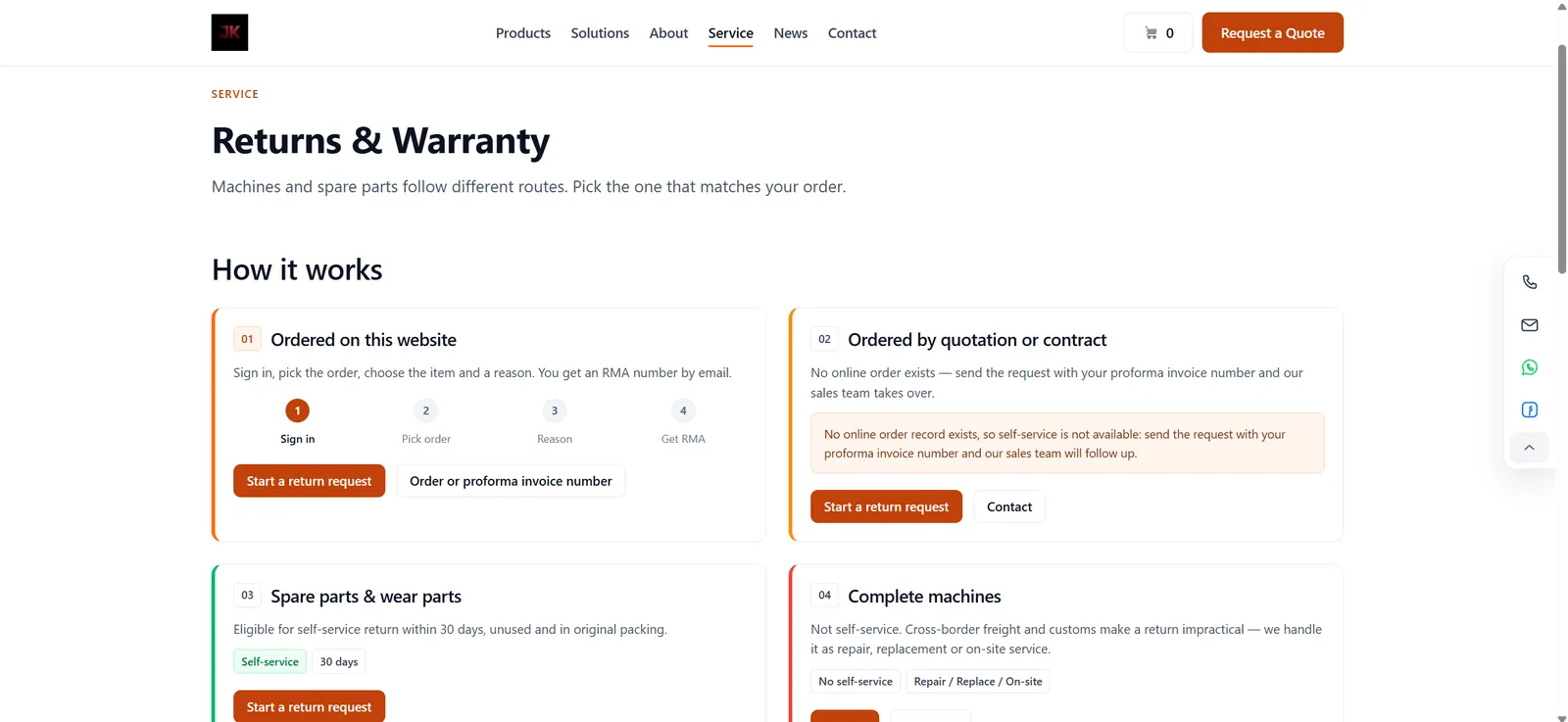
Returns & warranty — four routes, because a $10 spare part and a $1,400 machine cannot share one policy
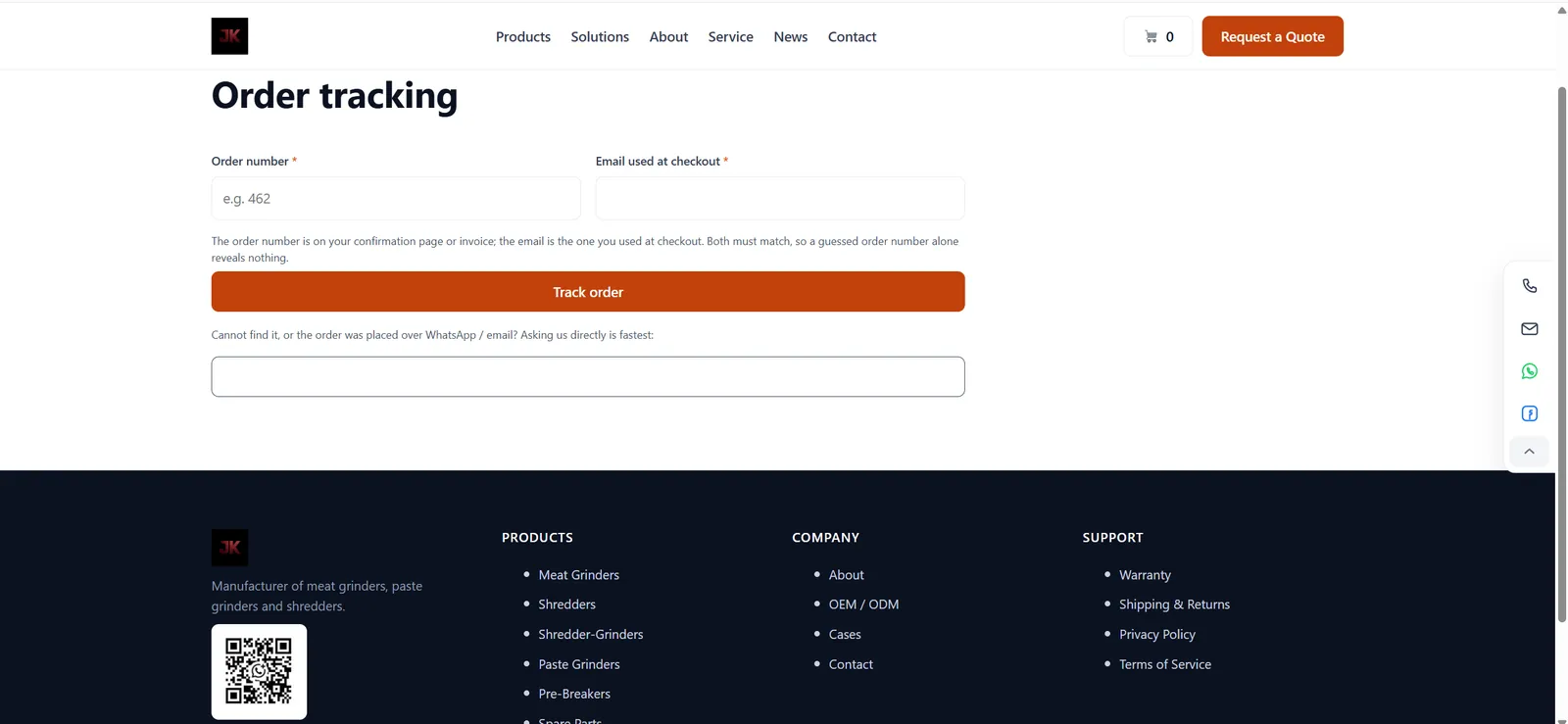
Order tracking — two matching keys, so guessing an order number reveals nothing
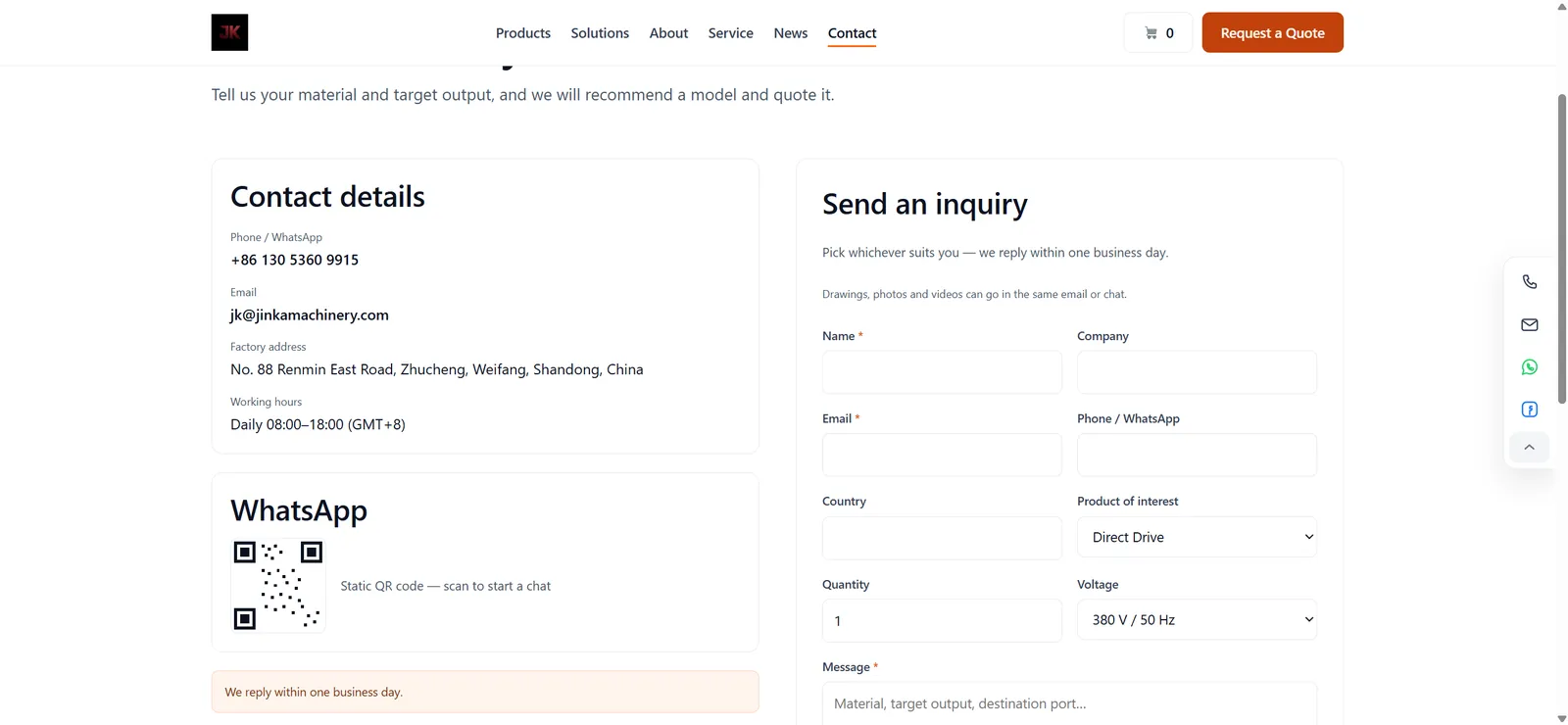
Enquiry — asks for material and target output rather than “how can we help?”
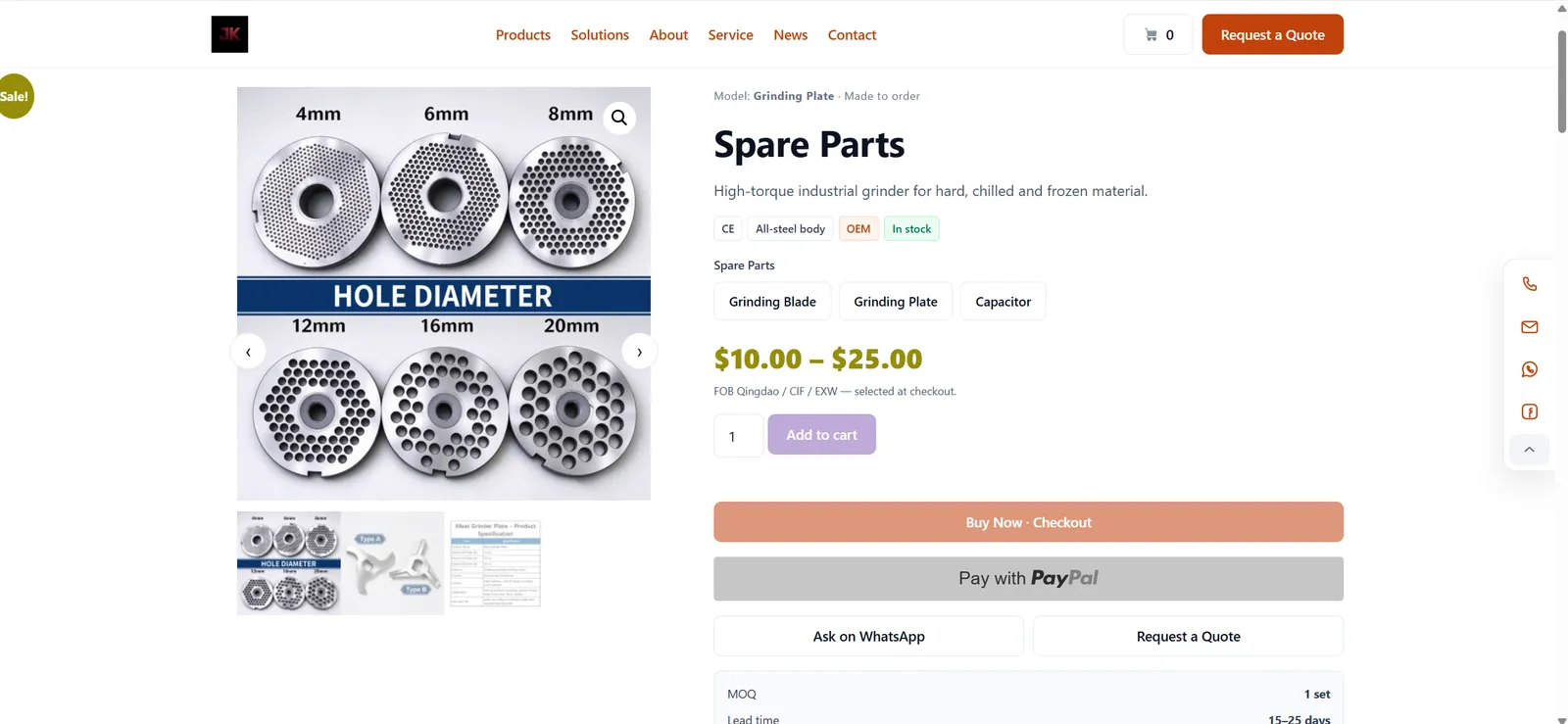
Spare parts — variants, live stock, and an explicit sale price against the old one
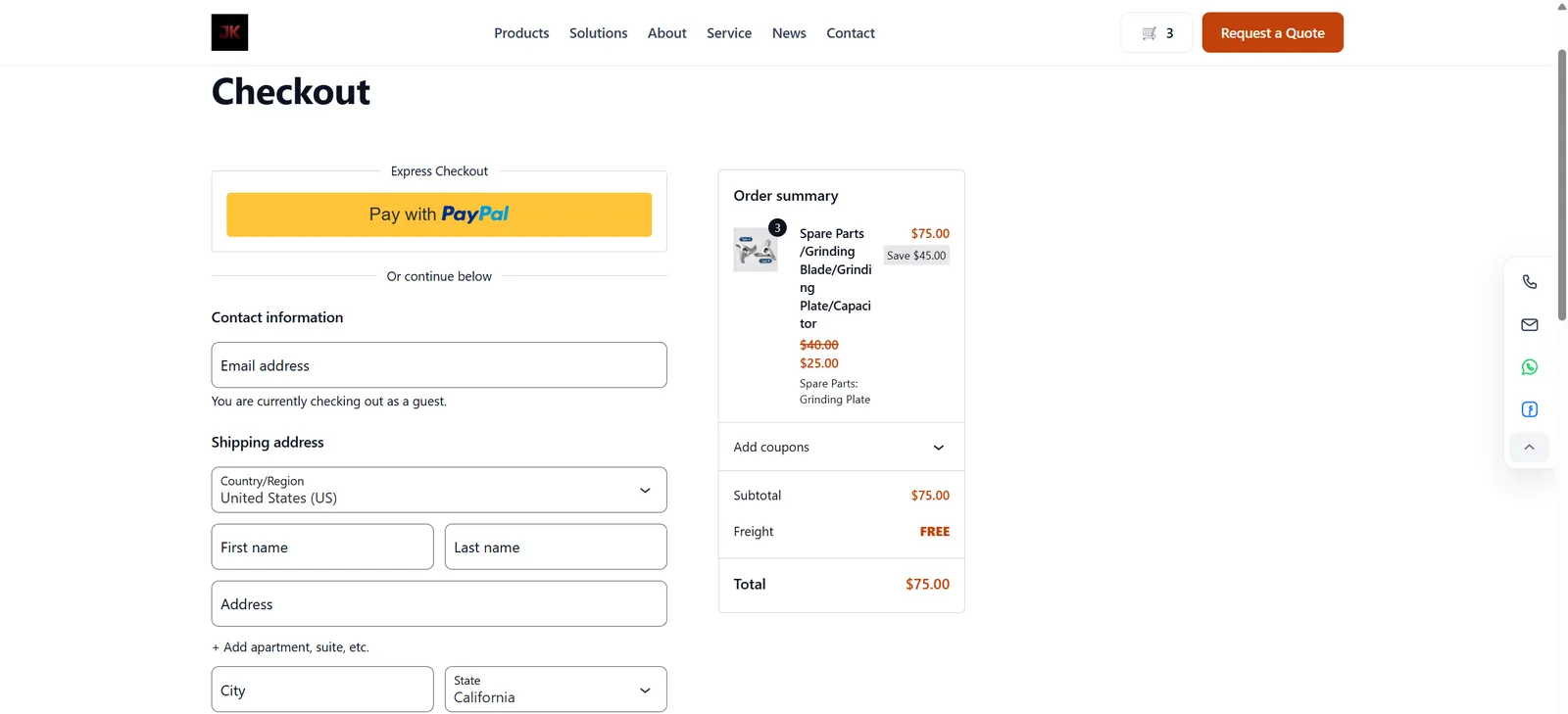
Checkout — guest checkout, PayPal, and shipping calculated from the destination country
Still running
The parts that only show up after launch
Delivered, then actually looked after
A store that nobody maintains decays quietly. This one has a check suite and a publishing workflow so it does not.The client publishes without us
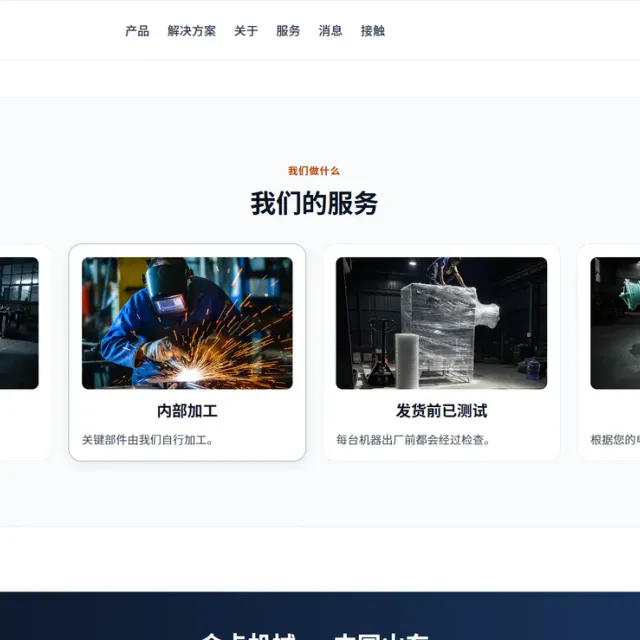
Products, images, variants, prices and site-wide content are editable from the admin, with a Chinese-language menu added on top of the English interface so their team can work in their own language.
Speed treated as a feature
The homepage video was reduced from 25.4 MB to 3.4 MB for mobile through a correctly sized encode and a poster frame — the original transcode had been failing silently for weeks.
Automated checks instead of promises
A delivery check suite runs against the live site: page-level overflow, container bounds, navigation behaviour on narrow screens, and class families against the approved samples.
Selling something that does not fit one checkout?
Most manufacturers sell both a commodity and a configured product. Tell us which is which and we will design the branching properly.
If you need a full store build, we will say on the first call whether we are the right studio for it.